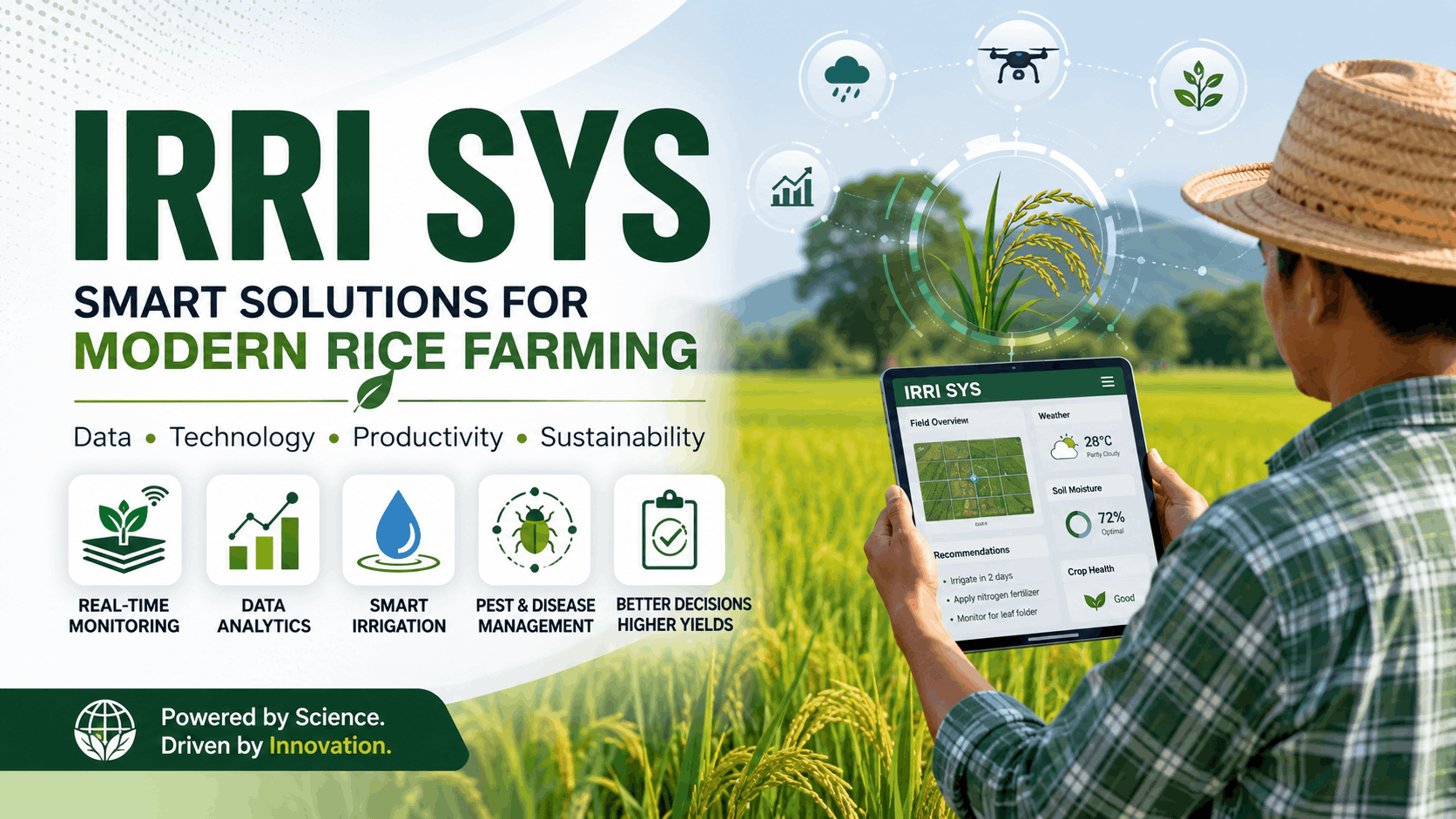

Rice is one of the world’s most important food crops, feeding billions of people every day. However, modern rice farming faces several challenges, including unpredictable weather, water shortages, pest outbreaks, rising production costs, and the need to produce higher yields with fewer resources. Traditional farming methods alone are often no longer enough to meet these demands. This is where IRRI SYS comes into the picture.
IRRI SYS is a modern digital platform designed to help improve rice farming through smart technologies, data analysis, and scientific recommendations. By combining agricultural research with digital tools, it enables farmers to make better decisions throughout the growing season—from planting and irrigation to pest management and harvesting.
Rather than relying solely on experience or guesswork, users can access timely insights that support more efficient farm management. Depending on how the system is implemented, it may use field observations, weather information, sensors, and research-based recommendations to help optimize crop performance.
In this guide, we’ll explain what IRRI SYS is, how it works, its key features, benefits, practical applications, and why it has become an important topic in modern agriculture.
What Is IRRI SYS?
IRRI SYS is a digital agricultural platform associated with the International Rice Research Institute (IRRI) and is designed to support better decision-making in rice production through technology and data-driven farming practices.
Its primary goal is to help farmers, researchers, and agricultural organizations improve productivity while promoting sustainable farming methods.
Instead of depending only on manual observations, IRRI SYS brings together information from different sources to provide practical recommendations that can improve crop management.
Depending on the specific implementation, the platform may support activities such as:
- Monitoring field conditions
- Managing irrigation schedules
- Tracking crop development
- Supporting pest and disease management
- Improving fertilizer planning
- Recording farm activities
- Analyzing agricultural data
By organizing this information in one place, users can make more informed decisions throughout the growing season.
Why Is IRRI SYS Important?
Global food demand continues to grow while agricultural resources become increasingly limited. Farmers must produce more rice using less water, fewer chemicals, and lower production costs without compromising crop quality.
At the same time, climate change has made farming less predictable. Irregular rainfall, rising temperatures, floods, droughts, and pest outbreaks can significantly affect crop yields.
IRRI SYS helps address these challenges by providing farmers with access to data and recommendations that support smarter farming decisions.
Some of its key objectives include:
- Improving crop productivity
- Reducing unnecessary resource use
- Supporting sustainable farming practices
- Minimizing production risks
- Helping farmers respond more quickly to changing field conditions
Instead of reacting to problems after they occur, farmers can often identify potential issues earlier and take corrective action before serious damage happens.
Key Features of IRRI SYS
The platform combines several digital technologies to improve farm management and support more efficient rice production.
Real-Time Field Monitoring
One of the most valuable features of IRRI SYS is its ability to monitor field conditions.
Depending on the available equipment, the system may collect information such as:
- Soil moisture
- Temperature
- Humidity
- Water levels
- Crop growth conditions
Having access to updated field data allows farmers to make timely management decisions instead of relying solely on visual inspections.
Smart Irrigation Management
Water is one of the most valuable resources in rice farming.
IRRI SYS helps improve irrigation planning by identifying when crops need water based on available data and environmental conditions.
This approach can help:
- Reduce water waste
- Improve irrigation efficiency
- Lower operating costs
- Support healthier crop growth
Efficient water management is becoming increasingly important in regions experiencing water scarcity.
Data Analysis and Decision Support
The platform processes agricultural information to generate useful insights that assist farmers in making informed decisions.
Instead of manually reviewing large amounts of information, users receive practical recommendations based on available field data.
These insights may relate to:
- Irrigation timing
- Fertilizer application
- Crop development
- Weather conditions
- Field management
By simplifying complex agricultural data, IRRI SYS makes it easier for users to take appropriate action.
Pest and Disease Monitoring
Pests and plant diseases remain major causes of crop losses worldwide.
IRRI SYS can help identify potential risks by combining field observations, environmental conditions, and agricultural knowledge to support early detection.
Early intervention allows farmers to respond before infestations spread across entire fields, helping reduce both crop damage and unnecessary pesticide use.
User-Friendly Dashboard
Modern agricultural technology should be easy to understand.
IRRI SYS is designed with a simple dashboard that allows users to access important information without requiring advanced technical knowledge.
Depending on the organization using the platform, users may be able to:
- View farm records
- Monitor crop conditions
- Access recommendations
- Track farming activities
- Review reports
A clear interface helps both experienced and first-time users navigate the system efficiently.
How Does IRRI SYS Work?
Although implementations may differ between organizations, the general workflow follows a straightforward process.
Step 1: Data Collection
The process begins by collecting information from multiple sources.
Data may come from:
- Field sensors
- Weather stations
- Satellite observations
- Farmer records
- Manual field inspections
Collecting accurate information creates the foundation for better decision-making.
Step 2: Data Processing
Once collected, the information is processed using digital tools and analytical models.
The system organizes the data and identifies patterns that may affect crop performance.
This helps transform raw information into practical recommendations that users can easily understand.
Step 3: Personalized Recommendations
Based on the available information, IRRI SYS provides guidance tailored to the field or farming conditions.
Recommendations may include:
- When to irrigate
- Fertilizer timing
- Crop management practices
- Pest monitoring advice
- Harvest planning
These recommendations help farmers make informed decisions throughout the production cycle.
Step 4: Continuous Monitoring
After recommendations are implemented, the system continues monitoring field conditions.
As new information becomes available, recommendations can be updated to reflect changing weather, crop development, or environmental conditions.
This ongoing monitoring supports continuous improvement throughout the growing season.
Benefits of Using IRRI SYS
IRRI SYS is designed to help farmers make smarter decisions throughout the rice-growing season. By combining agricultural research with digital technology, the platform can improve productivity while reducing unnecessary costs and resource usage.
Higher Crop Productivity
One of the biggest advantages of IRRI SYS is its ability to support better crop management. Farmers receive timely recommendations based on field conditions, helping them make informed decisions that can improve both yield and crop quality.
Better Water Management
Water is one of the most valuable resources in rice farming. IRRI SYS helps farmers use water more efficiently by providing irrigation recommendations based on available field and weather data.
This approach can help:
- Reduce water waste
- Improve irrigation efficiency
- Lower pumping costs
- Support healthier crop growth
Efficient irrigation is especially valuable in regions facing water shortages.
Lower Production Costs
Applying fertilizers, pesticides, and irrigation only when needed helps reduce unnecessary expenses.
Instead of relying on fixed schedules, farmers can make decisions using actual field information, leading to more efficient use of agricultural inputs.
Early Detection of Problems
Crop diseases and pest infestations can spread rapidly if they are not identified early.
IRRI SYS supports proactive farm management by helping users recognize potential risks before they become major problems. Early action can reduce crop losses and minimize the need for excessive pesticide use.
Environmentally Friendly Farming
Sustainable agriculture is becoming increasingly important around the world.
By encouraging efficient use of water, fertilizers, and crop protection products, IRRI SYS helps reduce environmental impact while maintaining productive farming practices.
Better Decision-Making
Agricultural decisions are often influenced by changing weather conditions and field performance.
IRRI SYS organizes complex information into easy-to-understand recommendations, allowing farmers to make more confident decisions throughout the growing season.
Real-World Applications of IRRI SYS
The platform can support a wide range of agricultural activities depending on how it is implemented.
Rice Farm Management
Farmers can monitor crop development, irrigation schedules, and field conditions from a centralized platform, making day-to-day management more organized.
Agricultural Research
Researchers can collect and analyze farming data to evaluate crop performance, identify trends, and develop improved cultivation practices.
Government Agricultural Programs
Agricultural departments and public institutions may use systems like IRRI SYS to monitor farming activities, support extension services, and provide recommendations to farming communities.
Agricultural Training
Educational institutions and training organizations can use the platform to teach modern farming techniques and demonstrate how digital agriculture supports sustainable food production.
Climate-Smart Agriculture
As weather patterns become less predictable, access to timely field information becomes increasingly valuable.
IRRI SYS supports climate-smart farming by helping users respond more effectively to changing environmental conditions.
Who Can Use IRRI SYS?
The platform is designed for various users involved in rice production and agricultural development.
- Small-scale rice farmers
- Commercial farming operations
- Agricultural researchers
- Universities and research institutions
- Government agriculture departments
- Agricultural extension officers
- Non-governmental organizations (NGOs)
- Agribusiness companies
Because different organizations have different needs, the available features may vary depending on the implementation.
Challenges and Limitations
Although IRRI SYS offers many advantages, there are some challenges users should consider.
Internet Connectivity
Some advanced features rely on internet access. In areas with poor connectivity, real-time updates may be limited.
Initial Training
Users who are unfamiliar with digital farming platforms may require basic training before they can fully benefit from the system.
Hardware Requirements
Certain implementations may require sensors, weather stations, or compatible devices, which could increase the initial investment.
Data Accuracy
The quality of recommendations depends on the accuracy of the data collected. Incorrect or incomplete information may reduce the effectiveness of the system.
Best Practices for Using IRRI SYS
To achieve the best results, users should follow a few simple practices.
- Keep farm records updated.
- Regularly monitor field conditions.
- Follow research-based recommendations whenever appropriate.
- Maintain sensors and monitoring equipment if installed.
- Review weather forecasts alongside system recommendations.
- Continue learning about modern rice farming techniques.
- Combine digital insights with practical farming experience.
Why Smart Rice Farming Is the Future
Agriculture is becoming increasingly data-driven.
Modern technologies such as digital monitoring, remote sensing, artificial intelligence, and precision agriculture are helping farmers produce more food while using fewer natural resources.
Platforms like IRRI SYS represent this shift toward smarter farming by making scientific knowledge more accessible to everyday users.
Rather than replacing farmers’ experience, these technologies are designed to support better decision-making and improve long-term agricultural sustainability.
FAQs
What is IRRI SYS?
IRRI SYS is a digital platform developed to support modern rice farming through data-driven insights, farm monitoring, and smart agricultural recommendations. It helps farmers improve productivity while promoting sustainable farming practices.
Who can use IRRI SYS?
IRRI SYS is suitable for a wide range of users, including rice farmers, agricultural researchers, government agencies, educational institutions, NGOs, and agribusiness organizations involved in rice production.
Does IRRI SYS require an internet connection?
Most real-time features require an internet connection. However, some implementations may allow offline data collection, which can be synchronized once connectivity is restored.
Can small-scale farmers benefit from IRRI SYS?
Yes. The platform is designed to support both small-scale and commercial rice farming operations. Its recommendations can help farmers improve efficiency regardless of farm size.
Does IRRI SYS replace traditional farming knowledge?
No. IRRI SYS is designed to complement traditional farming experience rather than replace it. It combines scientific research with field data to help farmers make better-informed decisions.
Is IRRI SYS only useful for rice farming?
Yes. IRRI SYS is specifically developed to support rice cultivation. Farmers growing other crops may need different digital agriculture platforms designed for their specific farming requirements.
How does IRRI SYS improve sustainability?
The platform encourages efficient use of water, fertilizers, and other agricultural inputs while helping farmers reduce waste and minimize environmental impact.
Is IRRI SYS difficult to learn?
Most modern versions are designed with user-friendly dashboards and simple navigation. Basic training may be helpful for first-time users, but the platform is intended to be accessible to users with different levels of technical experience.
IRRI SYS vs Traditional Rice Farming
| Feature | IRRI SYS | Traditional Farming |
|---|---|---|
| Decision Making | Data-driven recommendations | Personal experience |
| Irrigation | Smart scheduling | Manual planning |
| Crop Monitoring | Digital monitoring | Field observation only |
| Pest Detection | Early alerts | Usually after damage appears |
| Record Keeping | Digital records | Paper records |
| Resource Management | Optimized | Often estimated |
Final Thoughts
Modern agriculture is rapidly adopting digital technologies to improve productivity, reduce costs, and promote sustainable farming. IRRI SYS represents this transformation by bringing together agricultural research, field data, and smart decision-making tools into a single platform.
Rather than relying solely on traditional methods, farmers can use data-driven insights to better manage irrigation, monitor crop health, respond to pest risks, and improve overall farm performance. This not only supports higher productivity but also encourages more responsible use of natural resources.
As technology continues to evolve, platforms like IRRI SYS are expected to play an increasingly important role in helping farmers meet the growing demand for food while adapting to changing environmental conditions.
Whether you’re a farmer looking to improve your harvest, a researcher studying agricultural innovation, or someone interested in smart farming technologies, understanding IRRI SYS provides valuable insight into the future of rice cultivation.