

Video content has become one of the most effective ways to communicate online. Whether you’re teaching students, training employees, marketing a product, or sharing knowledge with your audience, video&a are often easier to understand than long blocks of text.
However, traditional videos have one limitation—they are passive. Viewers simply watch from beginning to end without participating. This often leads to lower engagement and reduced information retention.
This is where Video&A changes the experience.
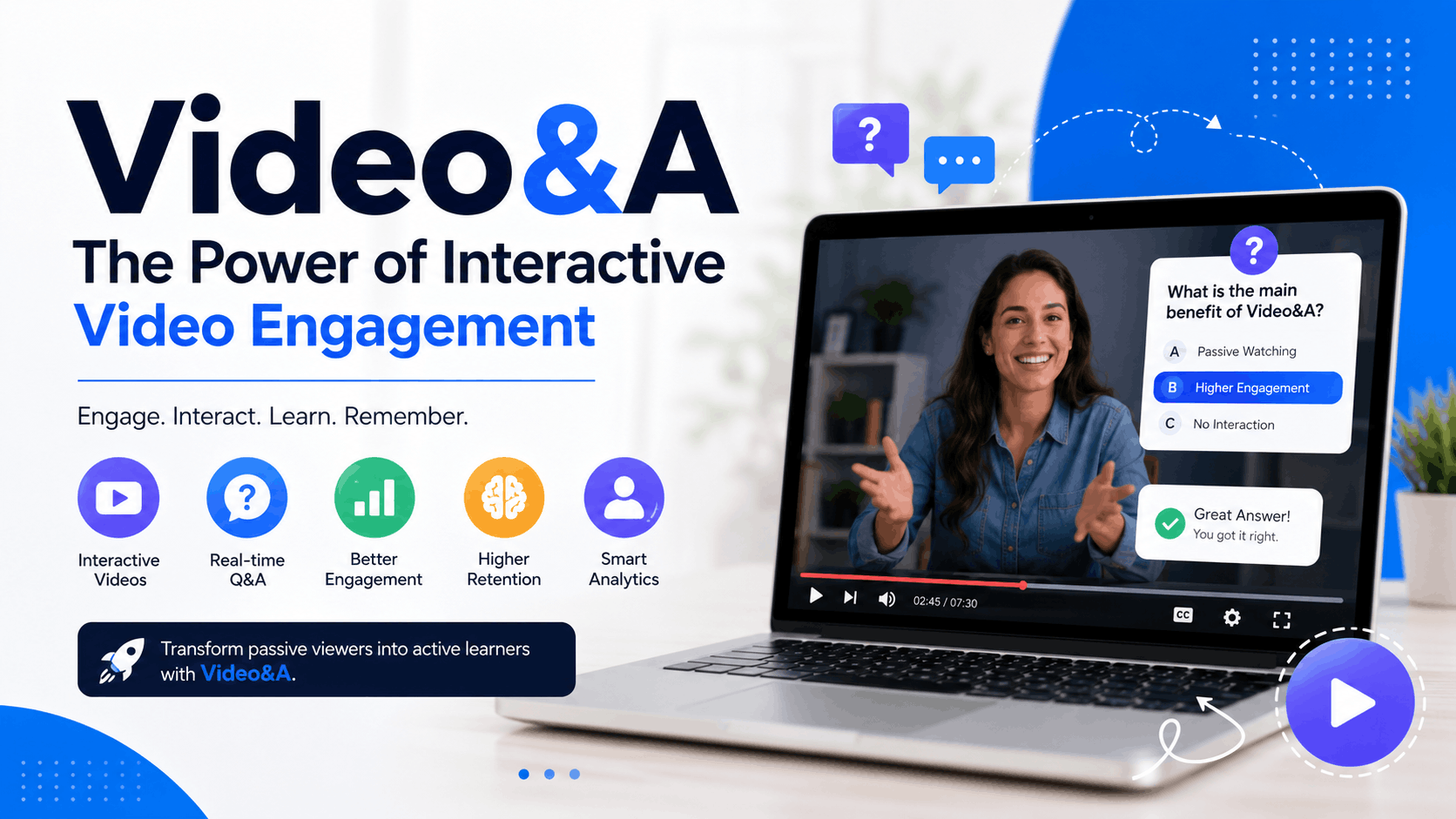
Instead of allowing viewers to watch passively, Video&A transforms a standard video into an interactive learning experience. Questions can appear throughout the video, encouraging viewers to think, respond, and actively participate. As a result, users remain engaged for longer, understand concepts more effectively, and creators receive valuable insights into audience behavior.
Whether you’re an educator, business owner, content creator, or marketer, understanding how Video&A works can help you create more meaningful experiences for your audience.
In this guide, you’ll learn everything about Video&A, including how it works, its advantages, popular use cases, best practices, and tips for creating highly engaging interactive videos.
What Is Video&A?
Video&A is an interactive video format that combines traditional video content with questions and answers throughout the viewing experience.
Instead of simply watching a video from start to finish, viewers interact with the content by answering questions, selecting responses, or completing small activities before continuing.
These questions may appear:
- During the video
- At specific checkpoints
- At the end of the video
- After important concepts are explained
Unlike ordinary videos, Video&A encourages active participation instead of passive viewing.
For example, an online instructor teaching digital marketing may pause the lesson after explaining SEO fundamentals and ask students:
“Which factor has the biggest impact on search rankings?”
The learner selects an answer before moving to the next lesson.
This simple interaction increases attention and helps reinforce learning.
How Does Video&A Work?
The process behind Video&A is straightforward, but highly effective.
A creator uploads a video to an interactive platform and inserts questions at selected moments throughout the timeline.
These questions can be:
- Multiple-choice
- True or false
- Open-ended
- Fill-in-the-blank
- Polls
- Surveys
- Knowledge checks
As viewers watch the video, playback pauses automatically when a question appears.
The viewer answers the question before continuing.
Depending on the platform, immediate feedback may be displayed, allowing viewers to understand whether they answered correctly.
For businesses and educators, every interaction is recorded, making it easier to measure engagement, learning progress, and audience understanding.
Why Video&A Is Becoming More Popular
People today consume enormous amounts of video content every day.
The challenge isn’t getting someone to click on a video.
The real challenge is keeping them engaged until the end.
Research consistently shows that viewer attention decreases as videos become longer.
Interactive videos solve this problem by involving viewers throughout the experience.
Instead of becoming passive observers, they become active participants.
This creates several advantages:
- Higher watch time
- Better knowledge retention
- Increased participation
- Improved completion rates
- More meaningful audience insights
For organizations that depend on education or customer engagement, these benefits make Video&A an increasingly valuable tool.
Key Features of Video&A
A good Video&A platform includes several interactive features designed to improve learning and engagement.
Interactive Questions
Questions can appear automatically throughout the video, encouraging viewers to participate rather than simply watch.
Instant Feedback
Many platforms provide immediate explanations after each answer, helping users understand mistakes and reinforce correct information.
Progress Tracking
Educators and businesses can monitor viewer progress, completion rates, quiz scores, and engagement levels.
Personalized Learning
Depending on user responses, some advanced platforms can recommend additional resources or guide viewers toward different learning paths.
Analytics Dashboard
Detailed reports help creators identify:
- Which questions were most difficult
- Where viewers stopped watching
- Average completion rates
- Engagement levels
- Viewer performance over time
These insights help improve future content and training programs.
Benefits of Using Video&A
Interactive videos offer advantages that traditional videos simply cannot provide.
1. Higher Viewer Engagement
Passive viewing often leads to distraction.
Interactive questions encourage viewers to stay focused because they know they’ll be asked to participate throughout the video.
As a result, engagement naturally increases.
2. Better Knowledge Retention
People tend to remember information better when they actively use it.
Answering questions immediately after learning a concept strengthens memory and improves understanding.
Instead of simply watching information, viewers apply it in real time.
3. Improved Learning Outcomes
Educational institutions increasingly use Video&A because students perform better when lessons include interactive checkpoints.
Rather than waiting until the end of a lesson for an assessment, students continuously reinforce their knowledge throughout the learning process.
Where Video&A Is Used
One of the biggest advantages of Video&A is its flexibility. It can be used across multiple industries to improve communication, learning, and audience engagement.
Let’s explore the most common applications.
Education and Online Learning
Educational institutions and online learning platforms use Video&A to create interactive lessons that keep students actively involved throughout the learning process.
Instead of watching a lecture without interruption, students answer short questions after each topic. This helps teachers identify knowledge gaps before moving to the next lesson.
For example, an online programming course may ask students to predict the output of a code snippet before revealing the correct answer.
This simple interaction encourages critical thinking rather than passive learning.
Benefits for Educators
- Measure student understanding instantly
- Increase course completion rates
- Improve knowledge retention
- Identify difficult topics quickly
- Provide immediate feedback
Corporate Training
Many companies now use Video&A to train new employees, introduce workplace policies, and improve professional skills.
Traditional training videos often fail because employees watch them without paying full attention.
Interactive videos solve this problem by requiring participation throughout the lesson.
For example, after explaining workplace safety procedures, employees may answer questions before continuing to the next section.
Managers can later review reports to see who completed the training successfully.
Common Corporate Uses
- Employee onboarding
- Compliance training
- Workplace safety
- Product knowledge
- Sales training
- Customer service training
Marketing and Lead Generation
Marketing teams use Video&A to make promotional videos more engaging.
Instead of asking customers to simply watch a product demonstration, brands can collect opinions, preferences, and buying intent using interactive questions.
For example, a software company may ask:
“Which feature matters most to your business?”
Based on the customer’s answer, they can recommend different products or services.
This creates a personalized buying experience.
Marketing Benefits
- Higher engagement
- Better lead qualification
- Improved conversion rates
- More customer insights
- Increased watch time
Customer Support
Interactive videos are becoming increasingly popular in customer support.
Instead of reading long help articles, customers can watch guided tutorials while answering questions that direct them toward the correct solution.
Imagine setting up a new Wi-Fi router.
Rather than watching a 20-minute video, the tutorial asks simple questions like:
“Are you using Android or iPhone?”
Depending on the answer, viewers receive instructions relevant to their device.
This saves time and improves the customer experience.
Healthcare and Patient Education
Hospitals and healthcare organizations also use Video&A to educate patients.
Patients can watch videos explaining medications, treatment plans, or post-surgery care while answering simple questions that confirm their understanding.
This reduces misunderstandings and helps patients remember important instructions.
Types of Questions Used in Video&A
Different situations require different question formats.
Choosing the right question type keeps viewers engaged without making the experience feel overwhelming.
Multiple Choice
Perfect for testing knowledge quickly.
Example:
Which platform supports interactive video learning?
- YouTube
- PlayPosit
- Photoshop
- Gmail
True or False
Ideal for checking basic understanding.
Example:
Interactive videos improve viewer engagement.
- True
- False
Open-Ended Questions
Useful when you want viewers to explain concepts in their own words.
Example:
“How would you apply this strategy in your business?”
Poll Questions
Polls help collect opinions instead of testing knowledge.
Example:
Which feature would you like us to add next?
Reflection Questions
These encourage viewers to think deeply before continuing.
Example:
“What was the biggest lesson you learned from this section?”
How to Create an Effective Video&A
Creating an interactive video involves more than simply inserting questions.
The goal is to improve the viewing experience—not interrupt it.
Step 1: Define Your Objective
Before recording anything, ask yourself:
- What should viewers learn?
- What action should they take afterward?
- Which concepts are most important?
Clear objectives help determine where questions should appear.
Step 2: Write a Strong Script
Avoid reading from a textbook.
Use natural language and explain ideas as if you’re talking directly to one person.
Keep sentences short.
Avoid unnecessary technical jargon unless your audience expects it.
Step 3: Record High-Quality Video
Good audio is often more important than expensive cameras.
Use:
- Clear microphone
- Proper lighting
- Simple background
- High-resolution recording
Poor production quality can reduce viewer engagement.
Step 4: Add Interactive Questions
Place questions naturally after important concepts.
Avoid interrupting every few seconds.
A good rule is to include one interaction every few minutes depending on video length.
Step 5: Test Everything
Before publishing:
- Check spelling
- Test every question
- Verify correct answers
- Preview the complete experience
- Ensure mobile compatibility
Small technical issues can negatively affect user experience.
Step 6: Analyze Performance
After publishing, review analytics regularly.
Look for:
- Average watch time
- Completion rate
- Most missed questions
- Viewer drop-off points
- Overall engagement
Use this information to improve future videos.
Common Mistakes to Avoid
Even well-designed interactive videos can fail if creators overlook basic principles.
Asking Too Many Questions
Constant interruptions frustrate viewers.
Only ask questions that genuinely improve understanding.
Making Questions Too Difficult
The goal is learning—not creating an exam.
Questions should reinforce concepts instead of confusing viewers.
Ignoring Mobile Users
Many people watch videos on smartphones.
Always test your interactive videos across different screen sizes.
Using Long Videos
Shorter videos generally perform better.
Instead of creating one 45-minute lesson, divide it into several smaller lessons.
Forgetting Analytics
Collecting viewer responses is only useful if you analyze them.
Regularly review performance reports to identify opportunities for improvement.
Best Practices for Higher Engagement
To maximize the effectiveness of Video&A:
- Keep videos focused on one topic.
- Use clear, conversational language.
- Place questions after important concepts.
- Provide instant feedback where possible.
- Include visuals, diagrams, or screen recordings to explain complex ideas.
- Avoid overwhelming viewers with too many interactions.
- Update your content regularly so information remains accurate.
By following these practices, you can create an experience that is both educational and enjoyable for your audience.
Traditional Video vs Video&A
| Feature | Traditional Video | Video&A |
|---|---|---|
| Viewer Participation | Passive | Active |
| Learning Experience | One-way | Interactive |
| Engagement | Moderate | High |
| Knowledge Retention | Lower | Higher |
| Real-Time Feedback | No | Yes |
| Progress Tracking | Limited | Available |
| Analytics | Basic | Detailed |
| Personalization | No | Yes |
As the comparison shows, Video&A offers a more engaging and measurable learning experience than standard video content. It encourages viewers to stay involved while giving creators valuable insights into audience behavior.
Popular Platforms That Support Video&A
Several platforms make it easy to create interactive video experiences. The right choice depends on your goals, budget, and audience.
1. PlayPosit
PlayPosit is widely used in education. It allows instructors to embed quizzes, discussions, and interactive checkpoints directly into videos while tracking student performance.
2. H5P
H5P is an open-source solution that enables users to create interactive videos, quizzes, presentations, and learning activities. It integrates with many learning management systems.
3. Vidyard
Vidyard is popular among businesses and marketing teams. It combines video hosting with analytics, viewer engagement features, and interactive elements that support sales and customer communication.
4. EdPuzzle
EdPuzzle is designed specifically for education. Teachers can add voice notes, quizzes, and questions to video lessons while monitoring student progress.
5. Vimeo Interactive
Vimeo offers interactive video capabilities for businesses that want to create engaging customer experiences, product demonstrations, and training materials.
Is Video&A Right for Your Business?
If your goal is simply to entertain viewers, a traditional video may be enough.
However, if you want your audience to:
- Learn more effectively
- Stay engaged longer
- Complete training successfully
- Interact with your content
- Provide valuable feedback
- Improve customer experience
then Video&A can be a valuable investment.
Organizations that rely on education, onboarding, marketing, or customer support often see the greatest benefits from interactive video content.
FAQs
What does Video&A mean?
Video&A refers to an interactive video format that combines video content with questions and answers, allowing viewers to participate instead of simply watching.
Is Video&A the same as a video quiz?
Not exactly.
A video quiz focuses mainly on testing knowledge, while Video&A combines learning, engagement, feedback, and interaction throughout the entire viewing experience.
Can Video&A improve online learning?
Yes. Interactive learning encourages active participation, helping students understand concepts better and remember information for longer periods.
Which industries use Video&A?
Video&A is commonly used in:
- Education
- Corporate training
- Healthcare
- Marketing
- Customer support
- Employee onboarding
- Product demonstrations
Does Video&A work on mobile devices?
Most modern interactive video platforms support smartphones and tablets. However, creators should always test videos on different devices before publishing.
Is Video&A expensive to implement?
Not necessarily.
Some platforms offer free plans or affordable subscriptions, making interactive video accessible for individuals, educators, and small businesses.
Can I add Video&A to existing videos?
Yes. Many interactive video platforms allow you to upload an existing video and insert questions without recording a new one.
How do I measure the success of a Video&A campaign?
Key performance metrics include:
- Completion rate
- Viewer engagement
- Average watch time
- Quiz scores
- Click-through rate
- Viewer feedback
- Audience retention
Analyzing these metrics helps creators improve future content.
Final Thoughts
Video&A is changing the way people interact with video content. Instead of encouraging passive viewing, it creates meaningful experiences that keep audiences engaged, improve learning outcomes, and provide creators with valuable insights.
Whether you’re an educator teaching online courses, a business training employees, or a marketer looking to increase customer engagement, interactive videos can deliver better results than traditional video formats.
The key to success is keeping your videos clear, relevant, and interactive without overwhelming viewers. By combining high-quality content with thoughtful questions and regular performance analysis, you can create Video&A experiences that educate, engage, and inspire your audience.
As interactive learning and personalized content continue to grow, Video&A is likely to become an even more important part of digital communication in the years ahead.