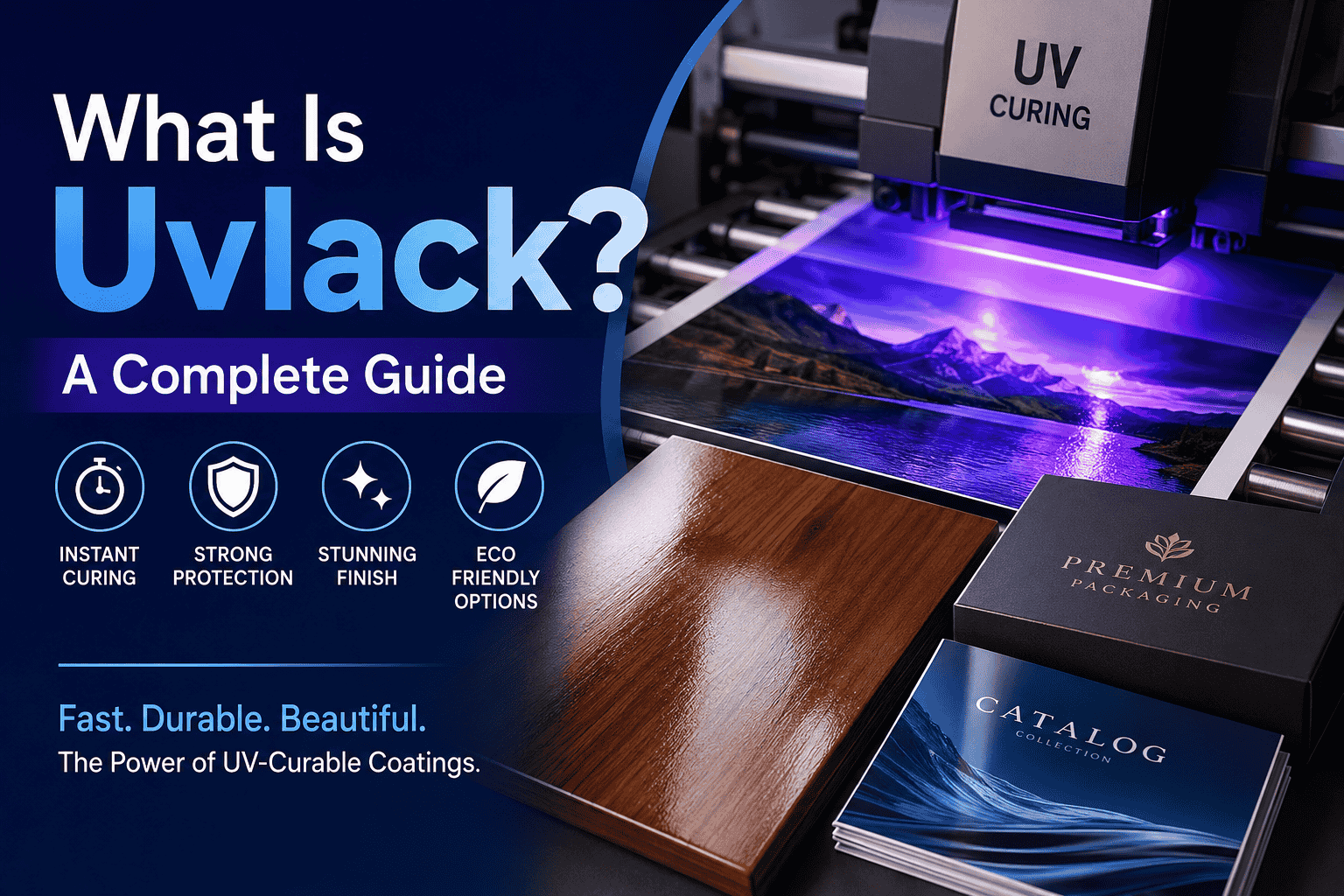

Have you ever wondered why some printed magazines have a glossy finish or why certain wooden furniture stays shiny and scratch-resistant for years? The answer often comes down to the type of coating used. One technology that’s become increasingly popular over the years is Uvlack.
If the name sounds unfamiliar, don’t worry. Most people outside the manufacturing or printing industries haven’t heard of it either. But chances are you’ve seen or touched products coated with Uvlack many times without even realizing it.
Simply put, Uvlack refers to a UV-curable coating. Unlike traditional coatings that take time to dry, this special finish hardens almost instantly when exposed to ultraviolet (UV) light. That might sound like a small difference, but it has completely changed how many products are manufactured.
In this guide, we’ll take a closer look at what Uvlack is, how it works, where it’s used, and why so many industries prefer it today.
What Is Uvlack?
Uvlack is a protective coating that cures using ultraviolet light instead of air or heat.
Traditional paints and coatings usually dry because the liquid evaporates over time. Uvlack works differently. Once UV light shines on the coating, a chemical reaction begins, turning the liquid into a solid layer within seconds.
That’s one of the biggest reasons manufacturers like using it. It saves time and keeps production moving.
How Does Uvlack Work?
The process is actually quite straightforward.
Step 1: Prepare the Surface
Before anything else, the material needs to be clean.
Dust, oil, or moisture can prevent the coating from sticking properly.
Common surfaces include:
- Wood
- Paper
- Plastic
- Metal
- Glass
- Cardboard
Step 2: Apply the Coating
The liquid coating is spread across the surface using machines.
Depending on the product, manufacturers may use:
- Spray systems
- Rollers
- Printing presses
- Curtain coating machines
At this stage, the coating is still wet.
Step 3: UV Curing
The coated product then passes under powerful UV lamps.
These lamps activate ingredients inside the coating called photoinitiators.
Within just a few seconds, the coating becomes hard and durable.
No waiting.
No long drying times.
Step 4: Finished Product
Once cured, the product is immediately ready for handling or packaging.
This quick turnaround makes production much more efficient.
Why Is Uvlack Becoming So Popular?
Manufacturers always look for ways to improve speed without sacrificing quality.
Uvlack helps them do exactly that.
Some of its biggest advantages include:
- Very fast curing
- Strong surface protection
- Attractive appearance
- Improved production efficiency
- Lower maintenance
Honestly, it’s easy to understand why many factories have switched to UV-curable coatings.
Main Benefits of Uvlack
Let’s look at some of its biggest strengths.
Fast Production
This is probably the most noticeable benefit.
Traditional coatings can take several minutes—or even hours—to dry.
Uvlack cures almost instantly.
That means production lines don’t have to stop and wait.
Excellent Durability
Once cured, the coating forms a tough protective layer.
It helps resist:
- Scratches
- Moisture
- Everyday wear
- Chemicals
- Dirt
This makes products last longer.
Better Appearance
Uvlack doesn’t just protect products.
It also improves how they look.
Depending on the finish, surfaces can appear:
- Glossy
- Matte
- Satin
- Smooth
- Textured
Many luxury products use UV coatings because they give packaging a premium feel.
Environmentally Friendly Options
Many UV-curable coatings contain fewer solvents than traditional coatings.
As a result, they can produce lower emissions during manufacturing.
That doesn’t mean every UV coating is completely eco-friendly, but many are considered a cleaner alternative.
Where Is Uvlack Used?
One thing that surprises people is just how many industries rely on UV coatings.
Here are some of the most common examples.
Printing Industry
Printed materials often need protection.
Without coatings, ink can fade or become damaged.
Uvlack is commonly applied to:
- Books
- Catalogs
- Brochures
- Magazines
- Business cards
- Product labels
Besides protecting the print, it also makes colors appear brighter.
Packaging Industry
Packaging is another major application.
Companies want their products to look attractive on store shelves.
UV coatings help create packaging that’s:
- More durable
- More colorful
- Resistant to scratches
- Resistant to moisture
Luxury brands especially appreciate these benefits.
Furniture Manufacturing
Furniture experiences daily wear.
Tables, cabinets, and shelves are touched constantly.
UV coatings help protect wooden surfaces from:
- Scratches
- Cleaning products
- Moisture
- Everyday use
Many modern furniture manufacturers use Uvlack because of its durability.
Flooring
Wood flooring needs strong protection.
People walk across it every day.
UV coatings provide an extra layer that helps reduce damage over time.
This can extend the life of hardwood floors significantly.
Electronics
Some electronic products also use UV coatings.
Applications may include:
- Plastic housings
- Decorative panels
- Protective covers
These coatings improve both appearance and durability.
Automotive Industry
Vehicle manufacturers use UV coatings on selected components.
These may include:
- Interior trim
- Plastic parts
- Decorative panels
The goal is usually to improve resistance to wear while maintaining a clean appearance.
Types of Uvlack Finishes
Different products require different looks.
Fortunately, UV coatings are available in several finishes.
| Finish | Appearance | Common Uses |
|---|---|---|
| Gloss | Bright and shiny | Packaging, magazines |
| Matte | Soft, non-reflective | Books, premium printing |
| Satin | Balanced finish | Furniture |
| Textured | Decorative surface | Specialty products |
Choosing the right finish depends on the final application.
Uvlack vs Traditional Coatings
People often wonder whether UV coatings are actually better.
The answer depends on the project.
Here’s a simple comparison.
| Feature | Uvlack | Traditional Coating |
| Drying Time | Seconds | Minutes or hours |
| Scratch Resistance | High | Moderate |
| Production Speed | Fast | Slower |
| Surface Finish | Excellent | Good |
| Durability | High | Moderate |
For high-volume manufacturing, Uvlack often offers significant advantages.
How to Choose the Right Uvlack
Not every coating is suitable for every job.
Before selecting one, manufacturers usually consider several factors.
Material
Different surfaces require different coating formulations.
Desired Finish
Do you want:
- Gloss?
- Matte?
- Satin?
The choice depends on the product.
Durability
Products used every day generally need stronger coatings.
Production Equipment
UV coatings require UV curing systems.
Without the right equipment, they won’t cure properly.
Does Uvlack Have Any Disadvantages?
Like any technology, it isn’t perfect.
Some challenges include:
- Higher initial equipment costs
- Need for UV curing lamps
- Staff training
- Specialized maintenance
Still, many businesses find that the long-term savings make the investment worthwhile.
Tips for Maintaining Uvlack-Coated Products
Although these coatings are durable, proper care still matters.
A few simple habits can help.
- Clean with a soft cloth.
- Avoid harsh chemicals unless recommended.
- Remove spills quickly.
- Don’t use abrasive scrubbers.
Taking care of the surface helps preserve its appearance for years.
The Future of Uvlack
UV coating technology continues to improve.
Manufacturers are developing coatings that cure even faster while becoming more environmentally friendly.
Some trends include:
- UV LED curing
- Lower energy consumption
- Better flexibility
- Improved scratch resistance
- Sustainable formulations
As industries continue searching for faster and cleaner production methods, Uvlack will likely become even more common.
FAQs
What is Uvlack?
Uvlack is a UV-curable coating that hardens almost instantly when exposed to ultraviolet light.
Where is Uvlack commonly used?
It is widely used in printing, furniture manufacturing, packaging, flooring, electronics, and automotive production.
Is Uvlack durable?
Yes. It provides excellent resistance to scratches, moisture, chemicals, and everyday wear.
Does Uvlack dry naturally?
No. It requires ultraviolet light to cure properly.
Is Uvlack environmentally friendly?
Many UV-curable coatings produce fewer solvent emissions than traditional coatings, making them a more sustainable option.
Can Uvlack be applied to different materials?
Yes. It works on wood, paper, plastic, glass, metal, and several other surfaces when the correct formulation is used.
Conclusion
Although the term Uvlack may not be familiar to everyone, its impact is easy to see. From glossy packaging and printed brochures to durable furniture and hardwood floors, UV-curable coatings are used in countless products we encounter every day.
The biggest advantage is speed. Instead of waiting hours for coatings to dry, manufacturers can complete the curing process in just seconds. That means faster production, better efficiency, and consistent quality.
Of course, no coating system is perfect. Uvlack requires specialized equipment and careful application. But for many businesses, the benefits far outweigh the challenges.
As technology continues to evolve, UV-curable coatings are expected to become even more advanced. Whether you’re simply curious or researching industrial finishing solutions, understanding Uvlack gives you a better appreciation of the technology behind many modern products.